A post by Yordi Lemma.
As a college student, I’ve recognized how often discussions—especially about sensitive, difficult topics—can get derailed before they even begin. Sometimes people are worried they don’t have enough knowledge to contribute to a discussion, or make assumptions about the perspective of the person sitting across from them. Combined with not wanting to say the wrong thing, this can make people reluctant to participate in discussions about difficult or divisive subjects–which is an essential skill both while at college, and afterwards.
I found the Interactivity Foundation’s five-workshop series, “Better Practices for College Discussions”, really helpful in addressing these problems. I took part as both a participant and a facilitator, and I and other college students were able to develop meaningful skills that would aid us in discussions–such as asking better questions, or learning to understand the difference between intention and perception. Through these workshops I’ve been able to change the ways I approach dialogue in my college journey and reflect on my facilitation techniques and impact on fostering meaningful college discussions.
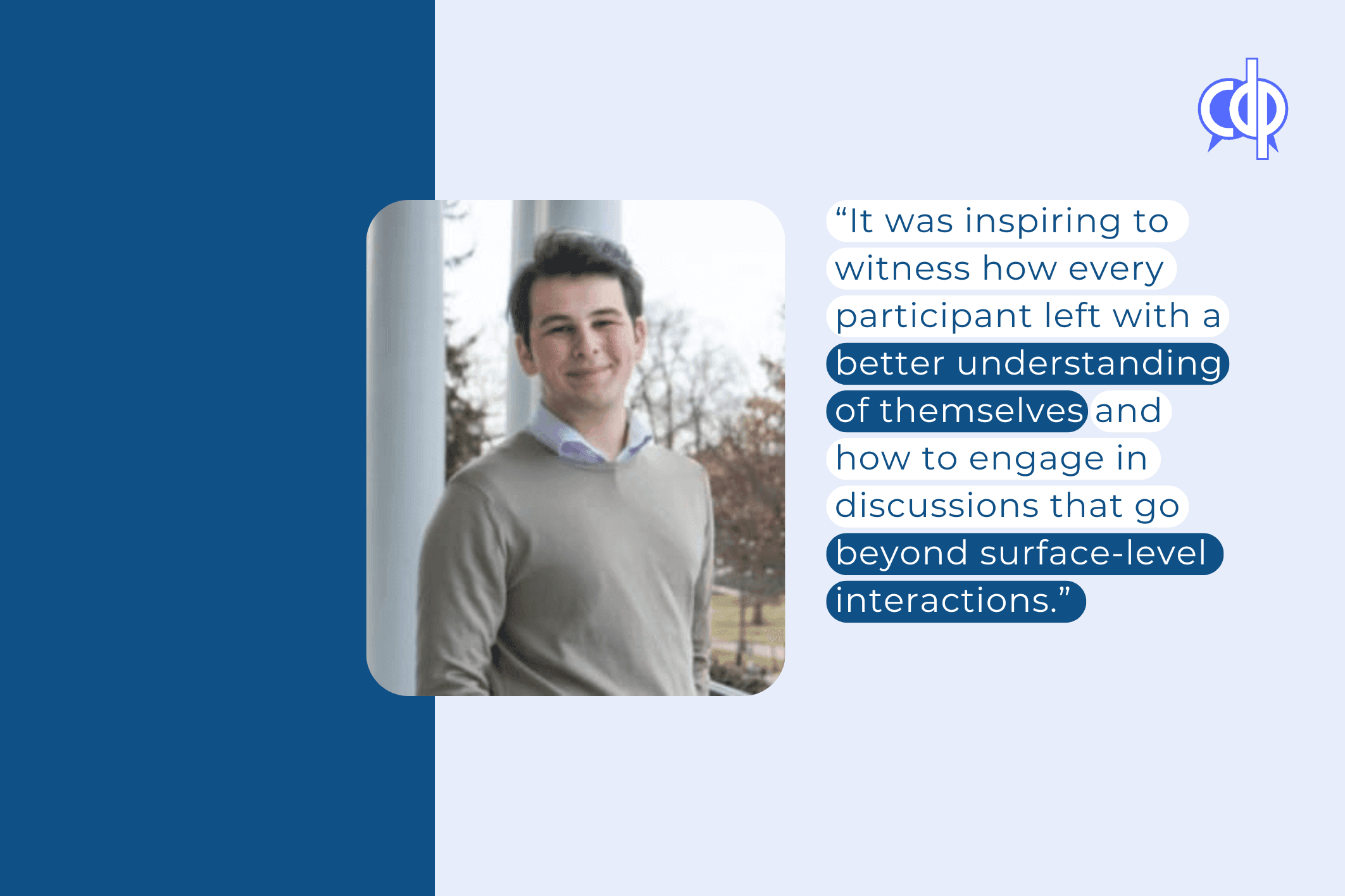
“I’ve been able to change the ways I approach dialogue in my college journey”
Being both a participant and facilitator in the workshop series gave me a unique perspective on dialogue and the challenges of fostering meaningful college discussions. An impactful session I took part in as a participant used an activity from the Collaborative Discussion Project (CDP) Toolkit that focused on using “yes, and” statements to build constructive dialogue instead of shutting down conversations with the word “but”. As someone who instinctively used “but” in discussions, this was a major shift for me and I started noticing how much more productive conversations were when I consciously avoided using the word. This workshop is applicable through college life in group projects and debates and also casual conversations, making them feel less confrontational and more collaborative.
“As someone who instinctively used “but” in discussions, this was a major shift for me and I started noticing how much more productive conversations were when I consciously avoided using the word.”
I had the opportunity to facilitate two CDP Toolkit activities during the workshops. Both helped participants reflect on how their values shape their perspectives and influence their approach to discussions. It was meaningful to see students self-reflect on what matters to them and how their values influence how they interpret and engage with other perspectives. The workshop provided a foundation for productive and collaborative discussions, allowing students to deepen their understanding of themselves and approach new conversations with greater openness. By understanding that values play a dynamic–rather than fixed–role, people recognize how their values change depending on context and perspective, opening the door for more thoughtful, impactful dialogue in college discussions. As students began acknowledging the fluid nature of their values, they could approach difficult, sensitive topics with less defensiveness and more curiosity. Instead of focusing solely on their viewpoint, participants were encouraged to see how their values aligned or conflicted with others, breaking down communication barriers.
Despite only being on campus for one semester so far, I’ve noticed a sense of apathy and reluctance among students to engage in meaningful discussion. Even in my discussion-based lectures, almost half of the students aren’t actively participating in the conversation—despite the topics’ relevance in our everyday lives. This proves there is a need for spaces where students can develop the skills necessary to fully participate and share their viewpoints without fear of judgment. Through the “Five Practices for Better College Discussions” and other programs offered by the Interactivity Foundation, students can push through their initial hesitation and apathy, embracing the vulnerability inherent in meaningful discussions. These programs encourage people to approach conversations in a more collaborative, productive way—ultimately leading to more meaningful connections between people.
“the skills you develop are transformative, both inside and outside the classroom”
I encourage all young people to get involved with the Interactivity Foundation programs and workshops because the skills you develop are transformative, both inside and outside the classroom. Participating in these workshops has shown me how to approach dialogue with openness and curiosity, creating space for better conversations. By building the skills to communicate effectively and compassionately, we can create genuine connections in our communities–and these programs are a perfect place to start.
About the Collaborative Discussion Project
The Collaborative Discussion Project is an IF project that provides free tools and activities that support collaborative discussion, as well as coach training. If you’d like to introduce these skills in your own community or learn more about hosting a workshop or specialty Certificate Program, reach out to us.
👉 Start using the free Collaborative Discussion Toolkit
👉 Join a free webinar for an Introduction to the Toolkit, or a workshop to deepen your skills
👉 Attend our July or September online CDP coach training to become a CDP Coach and deliver customized certificate programs
👉 Contact us for support running a workshop for your team or group
👉 Subscribe to the Collaborative Discussion Project newsletter for Toolkit activities, tips and tricks every Monday
👉 Donate to the Interactivity Foundation to keep supporting valuable dialogue work and programs