
Classroom Discussions

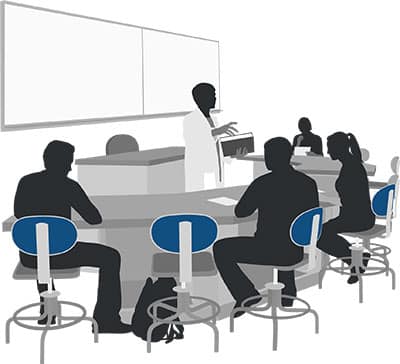
In late 2005, we began thinking about education and college classrooms as another forum in which we might further develop our methods for facilitated, small-group discussions of broad public policy topics. We were drawn to this approach by certain key similarities between education and our evolving approach to public discussion:

  • Time – both have a longer-term framework and don’t impose demands for immediate pay-offs
  • Developmental – both are focused on exploration and development as valuable activities in their own right
  • Discussion and interactivity – both value continuing discussion, dialogue, and discourse as important democratic and life skills
  • Civic engagement – both attempt to increase individual engagement with the political and policy realms.
  • These similarities have led us to support a number of education-related discussion efforts.

    Summer Institutes. We have sponsored and hosted two “Summer Institutes” in 2006 and 2009. In these summer conferences, we worked with interested college professors to adapt elements of our discussion process to the college classroom. Out of each of these summer programs, the Foundation has supported a variety of college courses that employ significant aspects of the IF discussion process. Our work with the Summer Institute faculty members has been very productive—both for us and, we hope, for the faculty members. We are continuing to work with many of them—not only on course design and implementation but also on a number of other collaborative research and discussion-related projects. We are currently planning for a third Summer Institute program to be held in 2012, which will focus more on working with first-year students on a couple college campuses.

    Other Education-Related Activities.

  • Research Projects.  In the spring of 2011, we selected a 8 research proposals for funding and other support support in the coming academic years.
  • IF Residents & Interns. We have also recently our first class of IF residents (post-graduate scholars) and Interns (undergraduate students), and we are looking forward to working with and learning from them.
  • Junior Faculty Development Program.  IF fellows Mark and Ieva Notturno Fellows are continuing their training of foreign faculty members in IF discussion methods through the State Department’s Junior Faculty Development Program (JFDP) and the Open Society Institute. This 50-hour training program was conducted in Washington, DC in cooperation with a research program in Social and Organizational Learning at George Washington University, which both hosted the JFDP scholars while they were in the United States and provided space for the training program.
  • Sponsoring Public Discussions of our reports by various college faculty and other scholars
  • Teaching Aids, Guidebooks, and academic papers. We have developed a number of teaching aids, facilitation guidebooks, and other support materials for using aspects of the IF discussion process in classroom discussions. We have also supported the development of a number of academic papers on related topics.
  • Sitemap

    Interactivity Foundation

    • PO Box 9
    • Parkersburg, WV 26102-0009
    • ph 304-424-3605
    • FAX 304-485-8218
    • email hidden; JavaScript is required